Showing posts with label Census Records. Show all posts

Wednesday, March 9, 2022

1950 Census - Using Photos To Help Find Addresses

     We are officially less than a month away from the release of the 1950 census. Are you ready? Have you found the addresses of the ancestors you hope to find? Have you looked them up at the Steve Morse website? Are you still struggling to find an address? In my previous posts, I've discussed some ways to find addresses for your ancestors. Read the following blog posts:

The 1950 Census - How to find addresses beforehand

The 1950 Census - Who do you hope to find?

    Going back to the post, Who Do You Hope To Find, I was looking at photos from around that time to get an idea of where my family might have been in 1950. Some photos contain dates, like the photos I shared. But there is something else you find in photos.

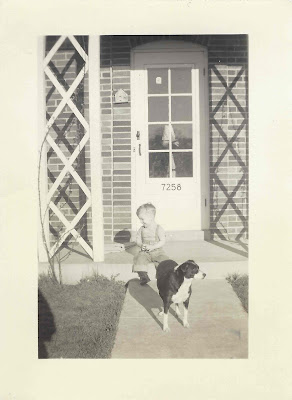
    After reviewing some other photos, I came across one that had a specific detail that can be very helpful. The photo below is of my Uncle Les sitting on the front porch with their dogs. It was mixed with a collection of random photos. But there is one detail that caught my attention. Do you know what it is?

Uncle Les sitting on porch
abt. 1949
St. Louis, Missouri

    Do you see the number on the door in the background? "7258". That's the address of the house. I have many photos of this house that I was able to group together because of the number on the front and the style of the house. Have you ever thought of looking at some photos from around that time to see if there was an address in the background?
    I do have quite a few photos of my family members standing in front of their houses, so I assume many of you will probably have that in your collection as well. Check the photos closely to see if there is a number on the house in the background. If you are bouncing back and forth between two addresses that your ancestors could have lived at, this might narrow it down.

    Right around the 1950 Census, there were a lot of changes happening to my mom's family. First, my mom was born in March. Second, my mom told me they moved from their house in St. Louis to their home in House Springs sometime in 1950. So there are two possibilities of where they could be living. So more sources were needed to help me narrow down the timeframe.
    As I mentioned in my blog, Who Do You Hope To Find, I had my mom's birth certificate which lists the address of her parents when she was born in 1950. That address is in St. Louis. Again, mom was born in March, but the Census was in April. So it's still possible they moved in April. Well, these pictures are also a helpful clue. I know this is my Uncle on the front porch based on his birthday. The weather looks warm cause he is wearing shorts. These are clues that could help you determine the dates of the photos. 

    So my suggestion is if you haven't been able to narrow down some locations for your ancestors, check out your photo collection. Then talk to some family. Once I started showing my mom some photos, she just blurted out that she was told they moved to House Springs when she was about six months old. Well, there you go. Based on that information, more than likely the family will still be in St. Louis at the time of the 1950 census. 

Have any of your photos led you to any answers?


Friday, February 18, 2022

1950 Census - Who Do You Hope To Find?

Who do you hope to find in the 1950 Census? A question asked frequently among the genealogy community. I don't know about you, but I have a list of people I am hoping to find. Some will answer some questions, others are just people I want to find.

There are a couple of family members that could be somewhat troublesome to find until the index gets released. Mostly because they moved around quite a bit. I have a few possible leads, but they may not pan out.

One specific lead that could be helpful is Pictures. My Grandma and Dad had a lot of pictures in their collection. I've been going through them for years dividing them up by year, location, family, etc. These pictures give clues about where my family could have been living during specific times of their lives. And based on these pictures, I can narrow down that location to hopefully find the Enumeration District Map so I can locate them on the 1950 Census.

Here are some pictures of family members I hope to find on the 1950 Census

Ilg, Buer, Cash, Kelley Family 
July 1955
Carmel, Indiana?
    This photo was taken in July 1955 possibly in Carmel, Indiana. Great grand Aunt Ruth and her husband, Howard are going to be a little difficult to locate for the 1950 Census because they moved around quite a bit for his job. He was an architect. I have found them in St. Louis, Missouri;  Joliet, Illinois; Dallas, Texas; and Carmel, Indiana, where they retired to eventually. My mom told me stories about visiting them in Indiana. This photo is one of those times family visited Aunt Ruth and Uncle Howard. Starting in the back row from left to right, there is Oma Mae Caldwell (2nd Great-grandma), Robert Edward Cash (son of Herbert & Alyce), Howard James Kelley (Great-Grand Uncle), Joseph Melchoir Ilg (Great-grandpa), and Herbert Arthur Cash (Husband of Alyce). In the front row from left to right, we have Margaret "Honey" Ilg (Great-grandma), Ruth Helen Kelley (Great-Grand Aunt), Edward Elmer Buer (2nd Great-grandpa), and Alyce(daughter of Edward & second wife, not pictured).

    Edward Buer (2nd Great-grandpa) was married to Oma before they divorced in 1913. He then married Alice Boyer (unknown maiden name). Alice is not pictured with family because she died in December 1950. But she will be on the 1950 Census. When Alice died, they were living in Joliet, Illinois according to the 1950 City Directory. So that's where they will be found in the 1950 Census. I do know that after Alice died, Edward moved in with Aunt Ruth and Uncle Howard. He died in 1967 in Carmel, Indiana. So in this photo, he was more than likely living with them. 

    Mom said she remembers Uncle Howard Kelley traveling to so many places for his work. Seattle, Texas, Illinois, and even Alaska. Mom remembers receiving a souvenir from him when she was little; a little Eskimo doll. So it's possible Aunt Ruth and Uncle Howard may be living somewhere completely different by the 1950 Census. He supposedly even traveled to different countries. Oh boy... But one thing we do know is they were in Carmel, Indiana by 1955. We hope... See how much information you can glean from one picture?


    This picture was taken sometime in the '50s. This is my Grandma Ruth Wheeler, Uncle Jerry Valdes, Uncle Les Wheeler, Mom Maggie Wheeler, and Uncle Howard Wheeler. Mom was born in 1950. I might have some photos from when my mom was little, but I haven't gone through all my grandma's photos yet. This picture was more than likely taken in High Ridge, Missouri at their house.

    This is where mom's memory comes into play. Mom said they moved to High Ridge when she was about six months old. She was born in March so that would mean they moved around September. The Census was taken in April. So mom would have been born for the Census. What's helpful is I have Mom's birth certificate and it has their address listed. That will help me find them in the 1950 Census. Everyone in this photo, except for Uncle Howard (who was born in 1951), will be on that census. 

More Photos to come!


Tuesday, December 7, 2021

Passenger Lists - How Do We Know Which Database to Search?

     How do you find out when your ancestors came to America and how do you find the passenger list they were on? These were questions that were posed to me the other day. The easiest answer would be to search the Passenger Lists database on Ancestry to see if anything comes up. But more than likely there will be multiple entries for the name you are searching for. So how do you determine which one is the correct entry? There are a couple of places to look for clues that will help you narrow down that information and find the correct passenger list.

EMS Ship
1887
Ancestry.com
2nd Great-Grandma Pauline Kimmerle
emigrated from Germany on this ship

Census Records

The first place to check is the census records. Some censuses have more information than others, but you can always glean something from them. Here is what you can find in each census.

1880 - Place of birth for parents
If they are born from another country, that will tell you where your ancestors would have come from.

1900 - Place of birth for parents, Year of immigration to US, No. of years in US, and Naturalization
There is an actual Citizenship section on this census. The year of immigration helps narrow down the time period to look for passenger lists. Just keep in mind that this could be wrong depending on who gave the information. Check other census records to compare the dates. The Naturalization column will tell you if they are Naturalized. If they are, you can check for that paperwork. 

1900 US Federal Census
Ancestry.com

1910, 1920, 1930 - Same as 1900

1940 - Place of birth and whether the Ancestor was a citizen or not. They are from a foreign country, column 16 will have one of the following: Na, Pa, Al, Na Cit, or 4. (See my blog post about Citizenship of Foreign Born - 1940 Census)

1940 US Federal Census
Ancestry.com

1950 (Released April 2022) - Same as 1940; Be sure to check the Supplemental Questions for more information.

This is just a start. The census records will give you clues on where to look next to find immigration information and records. 

Naturalization Records

When someone wants to become a Naturalized Citizen of the United States, there are a few different stages they have to go through. Through these stages, applications are filled out and certain information is given. This information will help you find when they came to the United States, what ship they traveled on, and sometimes the name of the village they came from. To learn more about Naturalization and Immigration records, visit the National Archives Website.

Case Study: Declaration of Intention Record - Martin Hribar
When a person wants to become a Naturalized Citizen, the first application they have to fill out is called a Declaration of Intention Record, also known as First Papers. Martin Hribar is the immigrant ancestor for my friend and her family. On the 1920 Census, in Columns 13, 14, and 15, it states that Martin Hribar was Naturalized, the year he was Naturalized, and when he Immigrated.

1920 US Federal Census
Ancestry.com
Martin Hribar - Beaver Dam, Butler, Missouri

This would mean he would have filled out a Declaration of Intention Record. On this record, it lists where Martin came from when he arrived in the United States. This will lead to the ship manifest.

Declaration of Intention Record
26 April 1906
FamilySearch.org
Martin Hribar

Passport Applications

Passports were issued for foreign travel for a few different reasons and the applications that were filled out contained a plethora of information regarding the immigration of the applicant. Information such as Birthdate, the village of birth, the date of immigration, the ship name, and when they were naturalized. 

Case Study: Passport Application - George Hilke
George Hilke is my husband's 2nd Great Grand Uncle; he is the brother of my husband's 2nd Great Grandfather. In order to learn more about the family, sometimes it's necessary to research the siblings of your direct ancestors. The passport application of George Hilke provided the village the family came from along with the immigration information. The biggest piece of information on this application is the name of the ship and the date they traveled. That will lead you directly to a ship manifest.

Passport Application
6 April 1896
Ancestry.com
George Hilke

Passenger Lists

Once you have some basic information, you can search on Ancestry.com or FamilySearch.org for ship manifests and passenger lists. Most people think that their ancestors came through Ellis Island, and while that may be true, that's not the first port that immigrants came through. Ellis Island was in operation from 1892-1950 so if your ancestor immigrated before 1892, they would have come through Castle Garden, like my 2nd Great-Grandma Pauline Kimmerle. Castle Garden was in operation from 1855 to 1890 and was the first official Emigration Depot. This is why it's important to have narrow down the details of an ancestor's immigration, otherwise, you may be searching in a database that they will not be in. Read about where you ancestor could have possibly come through and where you would find those records here: Castle Garden or Ellis Island?

Search online databases:

Ellis Island New York Passenger Lists - Family Search.org

Family History Center Ellis Island - StatueOfLiberty.org

Castle Garden Database - CastleGarden.org

Immigration & Travel - Ancestry.com


As you can see, there are multiple options, databases, and helpful links that will lead you to possible manifests your ancestor may be listed on. The more information you can gather on an ancestor from multiple sources, the easier time you will have narrowing down the records you will need to look through. While this is not an extensive list of helpful tips, there are multiple sources online to help you. Check out some of the links below:

https://www.archives.gov/research/immigration/overview

https://stevemorse.org/ 

https://www.familysearch.org/wiki/en/US_Immigration_Passenger_Arrival_Records

https://youtu.be/Wqk08S7SajU
Video by Connie Knox – Genealogy TV 

https://youtu.be/taDG7nTqzl0
Video by Lisa Louise Cook

https://youtu.be/mhGvWwGOh1s
Video by Connie Knox – Genealogy TV

https://youtu.be/kXNFjJ3XlKA
Passport Applications - US National Archives

I hope this information has been helpful for you. If you have any suggestions or if you have any questions, leave them in the comments below. 


Tuesday, April 27, 2021

The 1950 Census - How to find addresses beforehand

      We are now less than a year away from the release of the 1950 US Federal Census. Are you prepared for it? You are probably saying, "Yes!" but have you really sat down and prepared for its release? Don't forget it won't be indexed immediately after it becomes available. That will take time. And if you are like me, after waiting 10 years (since the release of the 1940 census) you don't want to wait any longer than you have to. So you better get to work.

Census Bureau enumerator interviewing mother with two children

What can you do to prepare?

     There are a few things you can do to prepare for the release of the 1950 census. That way when it does become available, you can dive right in.

  • Make a list of the ancestors you definitely want to look up on this census
  • Review the facts and sources you currently have to find your ancestors' addresses around 1950
  • Once you have those addresses, visit SteveMorse.org to find the Enumeration Districts (EDs) and the maps for those locations
  • Write down all the Enumeration Districts (EDs) you will need to look up once the census goes live
  • Plan some easy meals for yourself and your family for those days cause we know you are not going to want to stop to cook dinner. haha!
     There you go! Once you have all this information, you can dive right in to the 1950 census. Ok, that last bullet point is optional, but take it into consideration. You will thank me later. The hardest part of all of this will be narrowing down the location of your ancestors around the 1950 census. So let's talk about where to look for those addresses.

Where to Find Addresses for Your Ancestors

     There are plenty of sources you can check out to determine approximately (or exactly) where your ancestors were living during the time the 1950 census was taken. Some are more obvious while others are more obscure. I compiled this list from my own research and from some suggestions from Lisa Louise Cook of Genealogy Gems. She has a great video on the 1950 census available now on her YouTube Channel. Now, what is available to me, not always be available to you or others. So after you take a look at this list, make your own list of possible sources you could look up. But here is my suggested list.

  • City Directories (The obvious first choice)
    • If you are lucky, you can find your ancestors listed in the city directory for the year 1950 which will give you the address of your ancestor
    • If there isn't one available or you can't find them in the 1950 city directory, look at years before and after; if they are listed at the same address before 1950 and after, then there is a good chance they were still living there in 1950
    • If you check city directories before and after and get two different addresses, check EDs for both addresses; you might come up lucky
  • Previous Census
    • Even though it is 10 years in between the censuses, it's at least a place to start
    • If you are lucky, your ancestor didn't move around a lot so they could be at the same location; I have a couple of families that lived in the same house for 20+ years
  • Death Certificates/Registers
    • If your ancestor died soon after the 1950 census (Like my husband's great-grandfather) the address where he lived prior to his death should be written on it; same for the spouse or a child of an ancestor
    • Did your family have a relative living with them (like my Papa's Aunt Agnes) during the time of the 1950 census? Check their death certificate as well for the address
    • Don't forget to look at the informants on Death Certificates; Sometimes they list their addresses
    • On Registers, sometimes an address is given where the person lived or died
  • Military File/Records
    • The Korean War began in the year 1950, so any military records from that time could contain an address
    • Just like WWI and WWII the draft (or Selective Service System) was still active, so there are Korean War Draft Records available at the National Archives in St. Louis, Missouri; If you know for sure your ancestor/relative fought in the Korean War, you can write to the National Archives. Click here for more information. Written requests should be mailed to: National Personnel Records Center, 9700 Page Ave., St. Louis, MO 63132-5100 - Source: FamilySearch.org Wiki (At this time, there is no known info on whether or not these cards will be made available to the public like the WWI & WWII Draft Cards)
    • The National Archives in St. Louis also maintains the Korean War Official Military Personnel Files (OMPF)
      Note: In 1973, there was a disastrous fire at the National Archives building that destroyed approximately 18 million Personnel Files, so be prepared if they do not have the OMPF of your ancestor/relative
  • Baptismal/Church Records
    • Sometimes addresses are listed on the records or if anything a town; on my dad's baptism in 1952 the town of Times Beach, MO was listed (It's a small town that I was able to find the ED Map for to get the EDs from the area)
    • If no address is given, check the address of the church to narrow down the District your ancestor may have lived in (If they lived in a farming community, this may not be an option)
    • Don't forget about siblings who were born, baptized, or even died around this time
  • Newspapers
    • Birth; Birth announcement could contain an address
    • Death; Sometimes funerals were held in the family home or notice of a gathering at the relative's home after the service is mentioned
    • Marriage; a celebration could have taken place at someone's place of residence
    • Family Gatherings were mentioned in newspapers especially in smaller towns
    • Other mentions such as a crime, fire, advertisements (if the relative worked out of the home), retirement, etc; Glean all newspaper clippings about your ancestor for possible address
  • Social Security Records
    • There are social security indexes online, but you can access the original applications for your ancestors; these applications will have addresses listed on them
    • There is a Social Security Death Index available online, but sometimes the last known address is incorrect so beware
  • Ask Living Relatives (Of course!)
    • You would be surprised how many living relatives will be on the 1950 census (My mother and in-laws will be; dad passed away this year); they might be able to give you some clues as to where they lived
    • Even if they can't give you an address, ask them to tell you stories/memories from their childhood; maybe some of those can lead you to where they were living (based on where my dad said he was attending school, I was able to determine where they lived in 1950)
  • Your Own Personal Collection of Records
    • It is always said, Begin your research first at home; glean what you can from the records that are already in your possession or in living relatives
    • Items such as these are not available anywhere else, but in your house; these are suggestions from my own personal collection
      • Union Dues Book (I have my Papa's; based on the dates stamped, that could tell you if and when he lived at the address in the front of the book)
      • Business Cards (I have an old Business card of my Papa's; he was a carpenter)
      • Tax Returns (My Aunt Patty has the family's old tax returns from around 1950 which has the address listed)
      • Passports (We have the original passports that belonged to my Hubby's grandparents)
      • Letters (I have a few letters that were sent during WWII and Vietnam which list addresses on the envelope, so check with your parents for things such as this)
      • Occupational Records (You might be able to access these from an old place of employment, such as my Great-grand father who worked at the St. Louis Post Dispatch)
      • Photographs
        • The backs of photos could have a location (and date) written on the back; sometimes they are written on the front
        • Check the backgrounds of photos for any details that will help you determine the location (I have some photos of my Uncle when he was born taken in front of the house and you can see the house numbers in the background; based on previous city directories I can determine if this is an address I already have)
     How about that? I bet you didn't know there were many options available to you to help find your ancestors address for the 1950 census. And you can even use these to help with other censuses if you can't find your ancestors by doing a search in the index. If you have any other suggestions where you can look for addresses, please share them below in the comments.
     Now there may be some families that moved around a lot (like my dad's family between 1945-1952) or some that no matter what you do, you just can't find a recent address for. For some families, you may just have to wait until the census is indexed and hope that they will show up. You may still run into some problems, but do the best you can. For more information on the 1950 census, click here to see my blog post: "The 1950 Census - Everything You Need To Know".

What are you waiting for?? Get researching! 
You only have less than a year left!


Sunday, April 11, 2021

The 1950 Census - Everything You Need To Know


President Truman & wife taking the 1950 census
Photo courtesy of Wikimedia Commons

      The time has come for the 1950 census to be released to the public from the US Census Bureau. Genealogists and Historians have been waiting for this release, well, since the last census (1940) was released in April 2012. This census will have many people on it including our parents and grandparents, and you may even find yourself on it! Now you may have some questions: 

  • When will it be available?
  • What questions were asked?
  • How do I find my ancestors if they are not indexed?
  • How do I access the ED maps associated with the census?
  • What can I do to prepare for the release?
  • and many more!
     To help answer these questions, I have put together a list of links all about the 1950 census. I am by far not an expert but have compiled a list of those who ARE experts. This will be an ever-growing list of links as more information becomes available. If you have any helpful links you would like to share, please leave them in the comments. I hope these help you in your research! And thank you to all the YouTubers, bloggers, and researchers who have taken the time to share their knowledge and the information they have acquired with us.  

History and Helpful information 


Family Search Blog - 1950 Census Main Hub:

Volunteer to Index the 1950 Census:
 
Climbing Your Family Tree - Are You Ready for the 1950 Census?:

History Hub - Countdown to the 1950 Census:

History Hub - 1950 Blog Series

NARA Blog - Preparing for the 1950 Census:

NARA - Information about the 1950 Census

Ancestry.com - 1950 Census Main Hub

Ancestry.com - Information about the 1950 Census

Lisa Lisson - What To Know Before The Release

MyHeritage - 1950 census page: 
https://myheritage.com/census/us/

MyHeritage - Blog post sharing more details about the release of the 1950 census: 

Family History Fanatics - Prepare for the April 2022 Release of the 1950 Census


The 1950 Census


Blank (fillable) 1950 Census Form - Population (Scroll to the bottom)


Instructions transcribed:

Enumerator's Manual for the 1950 Census (Original):

Supplement to the Enumerator's Manual for the 1950 Census (Original):

Urban & Rural Enumerator's Workbook Population Housing & Agriculture:

Infant Cards:


Enumerator talking with family
Photo courtesy of Census.gov


Research 

Helpful tools through SteveMorse.org – Maps, Enumeration District info, In-depth Census info, etc.: 

Enumeration District Maps: 

Wards, Tracts, and Block Maps:

Enumeration District Locator: 

Deciphering Occupation Codes: 

Finding Ancestors Addresses Beforehand

Enumerator at mobile home park
Photo courtesy of Census.gov


Instructional & Helpful YouTube Videos

Lisa Louise Cook: 
The 1950 Census for Genealogy
Show Notes: 

Questions asked in the 1950 Census
Show Notes:

JDW Talks: 

Genealogy TV with Thomas McEntee: https://youtu.be/LaeK3GLbCsM

Family Search

I've created a playlist on YouTube of videos that have to do with the 1950 Census. The videos above are on the playlist along with some other special goodies. Check it out!


Images & Other Documents

Official Census Bureau Operations & Activity Photos
1950 Census Photos start on Page 9

Flow Charts from the National Archives

Advertising Campaign for the 1950 Census

Portfolio Control Label

Population Cards per State


There is so much you can do to prepare for the coming release of the 1950 census.
You better get on it now!


Sunday, June 14, 2020

Citizenship of the Foreign Born - 1940 US Census

What does the "4" mean??


     Census records are a genealogist's go-to for information. Based on the year, you can learn so much information about your ancestors and it can lead you to more records to look up. The biggest clue these sources will provide is where our ancestors came from. And not just where they came from, but when they came to the United States and whether or not they were naturalized. Most of these columns are pretty straight forward, but sometimes you run into an anomaly.
      A friend and fellow genealogist, Lisa Buckner from Roam Your Roots, posted a query on her Instagram regarding the Citizenship of Foreign Born column on the 1940 US Federal Census. For this column, if the registrant is of a Foreign Birth, then the Enumerator is to put in this column one of four choices: "Al" for Alien, "Pa" for First Papers, "Na" for Naturalized or "Am Cit" for American Citizen. I learned about this when I was researching a friend's family a few months ago. Pretty straight forward right? Not so fast. Lisa found another option for that column. The number "4". What does that mean?
     
1940 US Federal Census
Centralia, Marion, Illinois
Ancestry.com

     The census above is just a sample. I went looking through the 1940 census from an area local to my ancestors to see if this anomaly appeared in any other locations and it does. Lisa posted about this in our Genealogy Facebook group, GAA (Genealogy Addicts Anonymous) and she got the same responses. So we determined this wasn't an accident. There had to be a reason this number was used. And yet, no one knew what that reason was. And if there was a reason, there had to be instructions somewhere for the Enumerator that explained when to use the number "4". So off to the internet to search for answers.
     The first place I checked was the National Archives website (NARA). They have a lot of great resources for understanding records. That's where I first learned about this column and what the different acronyms meant. The NARA website does have the complete Enumerator instructions for the 1940 US Federal Census, so I read through that. Unfortunately, nothing was mentioned about when to use the number 4 in that column. This was the first place Lisa checked as well and came up with the same conclusion. 

Instructions to Enumerators
Population and Agriculture - 1940
Pg 47-48
Col. 16: Citizenship of Foreign Born

     Back to the drawing board. After that, I checked the Family Search Wiki. They are another great source for learning about records and how to locate them. Unfortunately, they didn't have anything different than what the National Archives website had. There had to be information somewhere that instructed the Enumerators to use the number "4" for this column. Ok, Google, what do you got?
     I put in the search bar "1940 US Census Citizenship of Foreign Born" to see if something would come up. Initially, nothing stood out. Then I found this one blog called Ancestor Roundup. I glanced over this post, It Was a 7: One 1940 Census Code Revealed and found a link to another site, IPUMS USA - US Census Date for Social, Economic, and Health Research. This link is to view "the procedural history that explains the post-enumeration coding done by the staff of the Census Bureau"  for the 1940 census. This would be what we were working for.
     If you scroll down to the section, "Operation 7: Instructions for General Population Coding", Pg 7 Place of Birth and Citizenship, bullet number 45:
Procedural History of the 1940 Census
of Population and Housing
Pg 128/192
"If you are unable to supply a missing entry for a foreign-born person, enter '4' (for unknown) in col. 16. (The code '4' should never be entered in col. 16 for a person reported in col. 15 as born 'At sea,' see par. 43 above.)"
     That explains the use of the number "4". If they never received an answer to the question to determine what entry should be given in col. 16, then they put the number "4". You may be asking why would they not have an answer for this column. There could be a number of reasons, but one I am thinking would be is that they never spoke to this person directly and the person giving the information would not know. You have to understand, if an Enumerator could not get information from a family, they could ask a neighbor. And a neighbor more than likely wouldn't have in-depth information like this.
     You may be also asking why I chose to write a blog post about this. Honestly, because there was no answer to this question anywhere online. Even on the major sites like the NARA. And given the fact other people on the GAA Facebook page were asking the same question, I felt the answer needed to be shared.
     So now we have an answer to the curious question that Lisa Buckner from Roam Your Roots presented. If you haven't checked out Roam Your Roots yet, click on the link above to check out her genealogy travel site. Lisa gives great tips on her blog and provides awesome travel vlogs on her youtube channel. Don't forget to sign up for her newsletter when you visit her page.  
      Maybe I will take some time and review Census Records for unaddressed topics people may have questions about. If you have some questions about Census Records, post them down below and I will see if I can come up with the answer. Hope this particular entry was helpful to you!